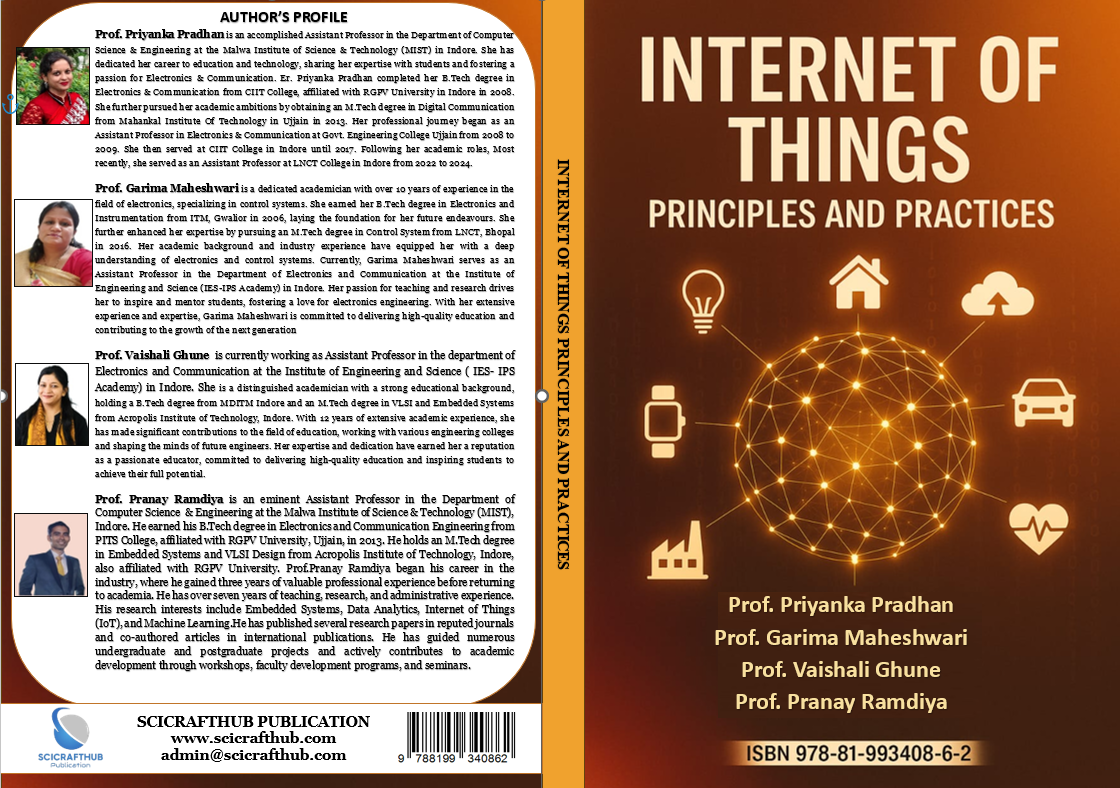
INTERNET OF THINGS PRINCIPLES AND PRACTICES
Internet of Things (IoT) Principles and Practices refers to the concepts and methodologies that underpin the connectivity, communication, and automation of everyday objects through the internet. IoT enables devices, from household appliances to industrial machines, to collect and exchange data, providing intelligent control and decision-making capabilities. The core principles of IoT include:
Connectivity: Devices must be able to connect and communicate over networks like Wi-Fi, Bluetooth, or cellular.
Data Collection: Sensors embedded in IoT devices gather data from the physical environment.
Data Processing: Data is analyzed, either locally (on-device) or in the cloud, to derive meaningful insights.
Automation and Control: Based on the data processed, IoT systems can automate tasks or alert users, improving efficiency.
Security and Privacy: As IoT devices exchange sensitive data, ensuring security and protecting user privacy is critical.
In practice, IoT is applied in various fields such as smart homes, healthcare (remote patient monitoring), agriculture (precision farming), and manufacturing (smart factories). These applications lead to increased operational efficiency, cost savings, and enhanced user experience.